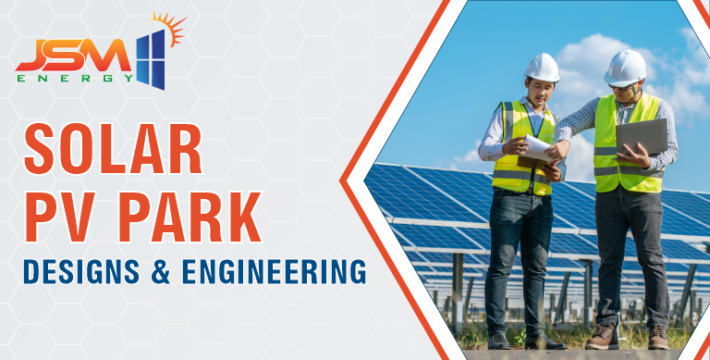
Solar PV Park Designs & Engineering: A Complete Guide for Sustainable Energy Projects
Imagine driving past a massive field where, instead of crops or cattle, you see endless rows of shiny blue panels quietly soaking up the sun. That’s a solar PV park—a modern power plant that doesn’t belch smoke, burn coal, or require fuel trucks. Just the sun, some engineering expertise, and a lot of careful planning.
The world urgently needs cleaner energy. Solar parks are one of the most practical ways to deliver it at scale. They don’t just light up homes—they power industries, reduce carbon emissions, and create jobs.
At JSM Energy, we specialize in designing and engineering solar PV parks that go beyond the basics. Our approach ensures projects are smarter, more efficient, and future-ready—because in renewable energy, design quality makes all the difference.
What is a Solar PV Park?
In simple terms, a solar PV (photovoltaic) park is a large-scale solar farm designed to generate electricity for the grid. Think of it as the solar version of a traditional power plant—but instead of burning coal or gas, it harvests sunlight.
Solar parks can be small, spanning a few acres to power local communities, or massive projects covering hundreds of acres and supplying electricity to entire cities. Regardless of size, the core idea remains the same: clean, reliable, and sustainable energy.
Why Solar Parks Are Crucial for the Future of Energy
Fossil fuels are not only running out—they’re accelerating climate change. Solar energy, on the other hand, is clean, renewable, and cost-competitive.
-
A solar PV park can operate for 25–30 years with relatively low maintenance.
-
Unlike oil or gas, the sun doesn’t come with a monthly bill.
-
Solar is now one of the cheapest sources of electricity worldwide.
This combination of affordability and sustainability is why solar parks are key to the global energy transition. And it’s why JSM Energy focuses on making solar parks not only feasible but profitable and dependable for decades to come.
Key Components of a Solar PV Park
A solar park is not just a field of panels—it’s a carefully engineered system where every part plays a role.
-
Solar Panels (Modules): The heart of the park, converting sunlight into electricity, even on cloudy days.
-
Mounting Structures: Frames that angle panels for maximum sunlight capture. Some even rotate to track the sun.
-
Inverters & Transformers: Converting direct current (DC) from panels into alternating current (AC) for grid use.
-
Cabling & Grid Connection: A network of cables and substations delivering clean power efficiently to the grid.
At JSM Energy, we select and integrate these components with precision—optimizing not just for performance, but also for longevity, safety, and minimal downtime.
Steps in Designing a Solar PV Park
Designing a solar park is like planning a city—it takes vision, data, and engineering expertise. Here’s how the process typically unfolds:
-
Site Selection & Feasibility Study
Location matters. Land availability, soil conditions, solar radiation, and grid connectivity are all assessed. A poor choice here can jeopardize the project. Learn more about our site survey consultancy. -
Solar Resource Assessment
Advanced tools like PVsyst analyze sunlight data from satellites and weather stations, predicting how much energy the site can generate. -
Layout & Orientation Planning
Panels must face the right direction and be tilted optimally. Even one tree casting a shadow can significantly reduce efficiency. -
Electrical System Design
Engineers design inverter placement, cabling routes, grounding systems, and safety protections. This ensures consistent, reliable power flow. -
Civil & Structural Works
Access roads, drainage systems, and secure fencing make the project durable and easy to maintain. Check out our solar civil work and HT/LT substation development services.
At JSM Energy, our process goes deeper. We don’t just design parks that work—we design parks that maximize yield, minimize costs, and deliver long-term reliability.
Engineering Considerations for Efficiency
A well-designed solar park doesn’t just generate power; it generates it efficiently.
-
Optimal Tilt & Tracking Systems: Tracking systems can boost energy yields by up to 30%.
-
Minimizing Shading: Careful spacing ensures one row doesn’t block another.
-
Cooling & Ventilation: Elevated mounting improves airflow, preventing panels from overheating and losing efficiency.
This is where JSM Energy does it better. Our engineers use advanced simulation tools and on-site expertise to fine-tune every detail, ensuring clients see maximum returns on their investment.
Sustainability and Environmental Impact
Solar parks are inherently green, but responsible design goes further.
-
Land Use & Biodiversity: We integrate agrivoltaics, where panels coexist with crops or livestock, turning solar farms into multi-use spaces.
-
Water Management: Many of our projects adopt robotic or dry-cleaning systems to reduce water use.
-
Panel Recycling: We plan for the full lifecycle, including recycling materials like glass, silicon, and aluminum at end-of-life.
At JSM Energy, sustainability isn’t an afterthought—it’s embedded into every stage of design and engineering. Learn more about our solar operation services and solar accessories & support.
Challenges in Solar PV Park Design
Every large project has hurdles. For solar parks, the biggest are:
-
Grid Integration: Solar’s variability can cause instability without smart inverters and storage.
-
Intermittency: Pairing parks with batteries ensures round-the-clock supply. Learn about our net metering services.
-
Permits & Regulations: Land approvals and environmental clearances can take time.
-
Cost Management: Balancing CapEx (installation) and OpEx (maintenance) is critical.
What makes JSM Energy different is our ability to anticipate and solve these challenges—so projects stay on track, on budget, and fully compliant.
Cost Optimization in Solar PV Projects
Solar power is affordable, but large-scale projects still require smart budgeting.
-
CapEx vs. OpEx: We balance upfront costs with long-term savings.
-
Financing Models: From PPAs to green bonds, we help clients secure cost-effective funding.
-
ROI Focus: Every design decision we make considers not just energy yield but also the client’s financial performance.
This client-centered focus is why many organizations trust JSM Energy to deliver better value.
Future Trends in Solar PV Park Engineering
The future isn’t just solar—it’s smarter solar.
-
Floating Solar Parks: Panels on reservoirs save land and improve efficiency.
-
Hybrid Renewable Parks: Combining solar with wind or hydro for consistent supply.
-
AI & Digital Twins: Using AI to predict equipment failures and optimize layouts before construction begins.
JSM Energy is already working with these innovations, ensuring our clients are future-ready.
Conclusion
Designing and engineering a solar PV park isn’t just about putting panels in a field—it’s about creating a sustainable, efficient, and future-proof energy solution. From feasibility studies and technical design to cost optimization and sustainability, every choice matters.
At JSM Energy, we bring expertise, precision, and innovation to every solar park project. We don’t just build solar parks—we build better energy futures.
👉 If your business, community, or organization is exploring solar PV park development, now is the time to act. Partner with JSM Energy for smarter designs, better engineering, and long-term results you can trust.

Leave a Comment